Choosing Land Or Cabin In Interior Alaska
May 21, 2026
May 21, 2026
If you are trying to decide between buying raw land or an existing cabin in Tok, you are not alone. It sounds simple at first, but in Interior Alaska, that choice can shape your budget, timeline, and day-to-day use of the property in very different ways. The good news is that when you understand access, utilities, site conditions, and repair risk, the decision gets much clearer. Let’s dive in.
Tok is in Alaska’s unorganized borough, which means there is no incorporated local government handling planning and zoning in the way many buyers expect elsewhere. State agencies play a major role in platting, access review, and other land-use matters that can affect how a parcel is developed.
That matters because buying in Tok is often less about choosing between “cheap land” and “ready cabin” and more about choosing which kind of project fits your goals. One path usually gives you more flexibility. The other may give you faster use, but not always fewer surprises.
Tok’s climate also shapes the decision. According to the Alaska Department of Environmental Conservation community profile, average January lows reach about -32°F, average July highs are around 72°F, annual precipitation is about 11 inches, and snowfall averages 33 inches. Winter ice fog and smoke are also common, so site setup, heating, access, and building condition matter more than they might in milder markets.
If your main goal is a lower entry price, raw land may catch your eye first. Current Tok land listings show a wide range, from about $18,000 for a 1-acre lot to roughly $236,400 for a 7.88-acre parcel, with many properties in the 4.7- to 16.8-acre range priced from about $29,000 to $123,600.
State land offerings show a similar pattern. In one 2025 Tok Triangle Phase II offering, an 8.82-acre parcel with a structure had a minimum bid of $26,400, and state parcel history shows Tok land sales ranging from about $7,900 to $26,300.
The big takeaway is simple: acreage alone does not set value in Tok. Access, utility availability, and existing improvements can affect price more than lot size by itself.
A parcel with gravel-road access may be more practical than one that ends with ATV-only or walk-in access. Some Tok-area state parcels note gravel-road access, while others involve pioneer roads, ATV trails, or the final stretch being limited to ATV or foot travel.
That difference can directly affect what you spend after closing. A lower-priced parcel may look like a bargain until you factor in driveway work, utility extension, and the cost of getting materials or equipment onto the site.
If you want a property you can use soon after closing, an existing cabin or home may be the better fit. Current Tok home listings show a median listing price of about $150,000, with examples ranging from $55,000 for a 288-square-foot home on 5 acres to $299,000 for a 1,980-square-foot home on 12.1 acres.
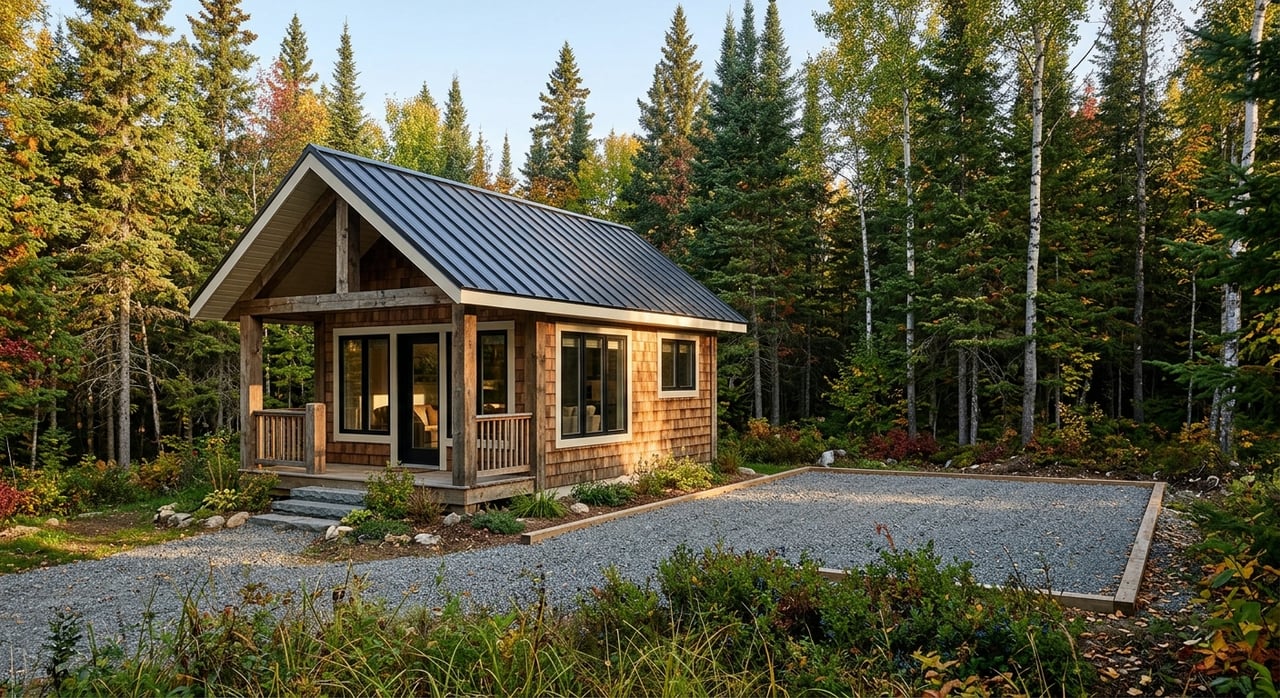
That can make a cabin attractive if you want shelter, storage, or a base of operations without starting from bare ground. In many cases, an existing structure can shorten the path between purchase and use.
But a cabin is not automatically move-in ready. One DNR Tok Triangle parcel with a structure was sold as-is and described as needing repairs to be habitable, with warnings about debris and possible contamination concerns.
A standing cabin can reduce some unknowns, but it can also introduce others. You still need to verify the condition of the structure, any repairs needed, wastewater documentation, water supply, legal access, and any permit history tied to the property.
In other words, a cabin may save you time, but only if the systems and site details check out. A structure without clear records or in poor condition can become just as complex as raw land.
In Tok, legal access is not a small detail. DNR says legal access is required for unorganized-borough subdivisions and for all lots within them, and state agencies may review access design where subdivisions meet the highway system.
If a parcel connects to the Alaska Highway or another state road, a driveway or approach-road permit may be required through Alaska DOT&PF when creating a new driveway or modifying an existing one in the state right-of-way. That is one reason access should be confirmed early, not treated as an afterthought.
Before you choose land or a cabin, ask:
For many buyers, this is where the choice becomes obvious. If you want simpler logistics, a property with established road access may be worth paying more for.
Many Tok-area state land pages note that there is no municipal water supply, sewer system, or other utilities in the subdivision. One parcel note says electricity is available in the area but would need to be extended at the buyer’s expense.
That means the true cost of a land purchase may include power extension, well planning, and onsite wastewater design. A cabin with some of those pieces already in place may offer a clearer picture, but only if the systems are documented and functional.
The Alaska Department of Environmental Conservation says private well owners are responsible for sampling and testing their own water. The state does not sample, test, or regulate private-well water quality, so testing is a buyer priority when a property relies on a private well.
DEC also advises buyers and sellers to start early on onsite wastewater records because lenders often want septic documentation. If records are missing, an engineer may need to evaluate the system, and DEC specifically recommends making sure wastewater documents match the bedroom count and the current legal description.
Tok buyers also need to think beyond price and square footage. Area fire rules, wetlands, and state code requirements can affect how quickly you can build, repair, or improve a property.
Tok Area Fire Prevention requires burn permits from April 1 through August 31. Some Tok-area parcels are also placed in a Critical Fire Management Option, which is another reminder that wildfire planning is part of owning and improving property in this area.
Some Tok-area parcels may contain wetlands, and DNR warns that U.S. Army Corps of Engineers permits may be needed before developing wetland areas. If part of a property looks usable on a map but sits in wetlands, your building options may be more limited than you expected.
At the state level, Alaska updated its Fire and Life Safety regulations to the 2021 code set effective October 28, 2022. The State Fire Marshal’s Plan Review Bureau says construction, repair, remodel, addition, or occupancy change on non-exempt buildings must be approved before work starts, though residential housing that is three-plex or smaller is exempt from that specific plan-review requirement.
Mechanical and inspection oversight can also vary. Alaska Mechanical Inspection says electrical work is overseen statewide, while plumbing inspection applies in communities with populations of 2,500 and above, so it is important to confirm which jurisdiction will handle your project.
Raw land often makes more sense if you want flexibility and can tolerate a longer setup timeline. It may also fit if you are comfortable treating the purchase like a step-by-step project rather than expecting immediate use.
You may be a better fit for raw land if you want:
The tradeoff is coordination. In Tok, raw land often means confirming access, driveway permissions, utility extension, well and wastewater planning, wetland issues, and fire-season restrictions before building can begin.
An existing cabin or home usually makes more sense if your priority is quicker use. It can also be the better choice if you want fewer unknowns about where you will sleep, store gear, or spend time right away.
You may be a better fit for a cabin if you want:
The tradeoff is condition risk. You still need to inspect the structure carefully and verify water, wastewater, access, and repair history.
Financing is another place where your choice matters. Loans secured by vacant or unimproved land are not always treated the same way as standard home-mortgage products, so it is smart to ask a lender early how a specific Tok property may be classified.
That question can affect your down payment, loan options, and timeline. A parcel that looks like a straightforward purchase may require a different lending path if it is considered raw or only lightly improved.
Whether you choose land or a cabin, a Tok-area purchase often works best when you build the right support team early. Depending on the property, that may include a title company, surveyor, lender, well contractor, septic engineer, and the relevant state agencies tied to access, wastewater, or code review.
For remote and off-grid property, that kind of planning is not overkill. It is often the difference between a smooth closing and a property that turns into a stressful surprise.
If you want the shortest path to using the property, a cabin usually wins, assuming the structure and systems are in sound condition. If you want the lowest starting price and are comfortable building your own path step by step, raw land may be the stronger option.
In Tok, the right answer is usually less about romance and more about logistics. When you match the property type to your budget, timeline, and tolerance for site work, you can buy with a lot more confidence.
If you are weighing remote land, off-grid parcels, or a cabin purchase in Alaska and want practical guidance from a brokerage that understands distinctive property logistics, reach out to Suzanne Marina Jasso for a virtual tour or local consultation.
I know that hard work, knowledge and dedication are required to earn my client's business, respect, and most importantly their trust. I would be honored to work with you in any real estate dealings