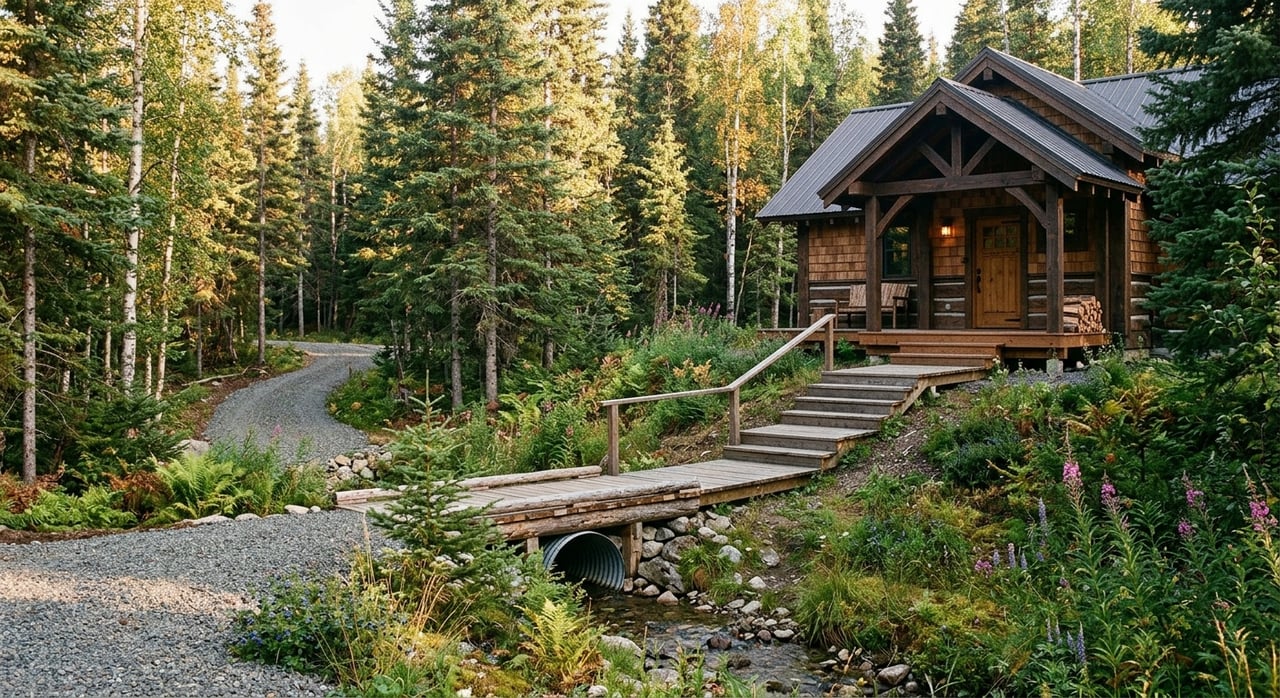
Due Diligence For Interior Alaska Recreational Properties
May 28, 2026
May 28, 2026
Buying recreational land near Tok can feel like pure Alaska freedom, right up until you realize a trail on a map is not the same thing as legal access. If you are looking at remote or lightly improved property in the Southeast Fairbanks area, small details can shape what you can actually build, use, finance, or insure. This guide walks you through the due diligence steps that matter most before you remove contingencies, so you can move forward with more clarity and fewer surprises. Let’s dive in.
Recreational property in Interior Alaska often comes with more moving parts than buyers expect. In the Tok area, a parcel may fall under state platting authority rather than a local borough, which means recorded plats, survey history, and state records carry a lot of weight.
That matters because remote land can look simple on first glance while hiding practical issues. Access may be seasonal, utilities may not exist, and older improvements may have limited documentation. A careful review upfront helps you understand what you are really buying.
Before you focus on views, trails, or cabin plans, confirm how the parcel is legally defined. Alaska DNR states that survey monuments and recorded plats control the legal description of a parcel, not online maps, informal boundaries, or visible travel routes.
That means you should review the recorded survey plat and any plat notes early. Easements, setbacks, and restrictions may affect where you can build, place a driveway, or clear land.
Tools like Alaska Mapper can help you research a property, but DNR makes clear that the graphic display is not the official record. The source documents remain the controlling record.
In practice, that means a map screenshot should never replace a plat review. If there is any confusion about corners, access, or improvements, go back to the recorded documents.
Alaska’s Recorder’s Office holds the permanent public record for recorded documents across the state. Once an instrument is recorded, it becomes part of that statewide public record.
For buyers, this is a key place to confirm documents tied to the parcel. Depending on the property, that may include plats, easements, or other recorded items that affect ownership and use.
One of the biggest mistakes buyers make with recreational land is assuming physical access equals legal access. DNR specifically notes that legal access may exist through section-line easements, platted rights-of-way, trail easements, navigable water bodies, or unreserved state land, but legal access may not be practical, developed, or built.
That is especially important around Tok, where some remote subdivisions may have little or no developed right-of-way. In some cases, access may function only in winter and depend on snowpack or freeze-up.
When you evaluate a Tok-area parcel, ask:
A parcel can meet the first test and still fail the second for your goals. If you plan to bring in building materials, tow equipment, or access the property year-round, that distinction matters.
If you plan to brush a trail or move heavy equipment, review that before closing. DNR says some improvements on unreserved state-owned land are allowed only under specific conditions, and moving heavy equipment such as a bulldozer requires a permit.
If you want to connect a driveway or approach road to a state-maintained highway, Alaska DOT&PF says a driveway or approach road permit may also be required. That is worth confirming before you count on easy vehicle access.
Utility availability is one of the biggest surprises on Interior Alaska recreational property. In DNR’s Tok subdivision example, the area had no water supply or sewer systems and no utilities such as electric, phone, or internet.
If you are buying raw or lightly improved land, do not assume basic services are nearby. Instead, verify each system one by one based on the parcel you are considering.
If a property has a well, DEC says the owner is responsible for water testing because the state does not sample, test, or regulate private well water quality. DEC recommends annual nitrate and coliform testing and, in some areas, arsenic testing.
You should also ask for the well drilling log. DEC notes that the log should be submitted to DNR for recording in WELTS, and missing logs can create future transaction problems.
If the property uses a creek, lake, or well for significant water use, check whether a water right exists. DNR states that landowners do not automatically have rights to groundwater or surface water, and a water-right application may be required.
This is an easy issue to overlook on recreational land, especially when a water source looks obvious on site. The legal right to use that water still needs to be confirmed through DNR records.
If there is an existing septic system, confirm whether it is documented and whether it appears to meet current requirements. DEC says all septic systems in Alaska are subject to Chapter 72.
DEC also notes that older on-site wastewater records may be searchable only by legal description or historic plat history. If records are incomplete, you may need deeper research before deciding whether the system is usable as-is.
For cabins and seasonal properties, heating fuel systems can be easy to miss during a quick showing. DEC says homeowners are fully responsible for residential heating oil tank systems, lines, and fittings, and spills can be expensive and reduce property value.
If the property includes a tank, ask questions early. Condition, age, and signs of leaks should all be part of your inspection plan.
Remote property can invite informal advice from neighbors, prior owners, or online groups. That local context can be useful, but it should not replace licensed professional review when the stakes are high.
Alaska regulates home inspectors through the Division of Corporations, Business and Professional Licensing, and the state also licenses land surveyors. If corners, easements, driveway placement, or site conditions are unclear, professional verification can save you from costly assumptions.
A survey can be especially important if parcel corners are unclear or if a driveway, trail, or structure appears close to a boundary or easement. In the unorganized borough, DNR’s Survey Section functions as the platting authority, which makes survey history and recorded plats especially important in remote areas.
If there is any mismatch between what you see on the ground and what the record suggests, slow down and get clarity. That is often far cheaper than fixing a boundary problem later.
Do not assume a standard homeowners policy handles flood risk. FEMA identifies the Flood Map Service Center as the official public source for flood hazard information, and Alaska’s Division of Insurance notes that flood insurance is separate from a homeowners policy and may be required by a lender.
In some cases, an elevation certificate may also be needed. If a parcel is near water or has low-lying ground, this should be a separate line item in your due diligence process, not an afterthought.
Wildfire review belongs on the same checklist as access and utilities. DNR states that Alaska fire-management options are divided into critical, full, modified, and limited categories, and those options are re-evaluated annually.
For Tok specifically, the Tok Area Fire Prevention office requires burn permits from April 1 through August 31. If your plan includes brush clearing, site cleanup, or burning slash, you will want to verify the current rules before removing contingencies.
Before you move forward on a recreational parcel near Tok, make sure you can answer these questions:
If you are buying from outside the area, due diligence becomes even more important. Recreational land in Interior Alaska can be beautiful and full of potential, but the gap between how a property looks online and how it functions in real life can be wide.
That is why a clear, document-first approach works best. When you verify plats, access, utilities, water, septic, and seasonal constraints upfront, you are in a much stronger position to decide whether the property fits your plans.
If you are weighing a remote or recreational property in Alaska and want a grounded, detail-minded approach, Suzanne Marina Jasso can help you think through the right questions before you commit.

I know that hard work, knowledge and dedication are required to earn my client's business, respect, and most importantly their trust. I would be honored to work with you in any real estate dealings