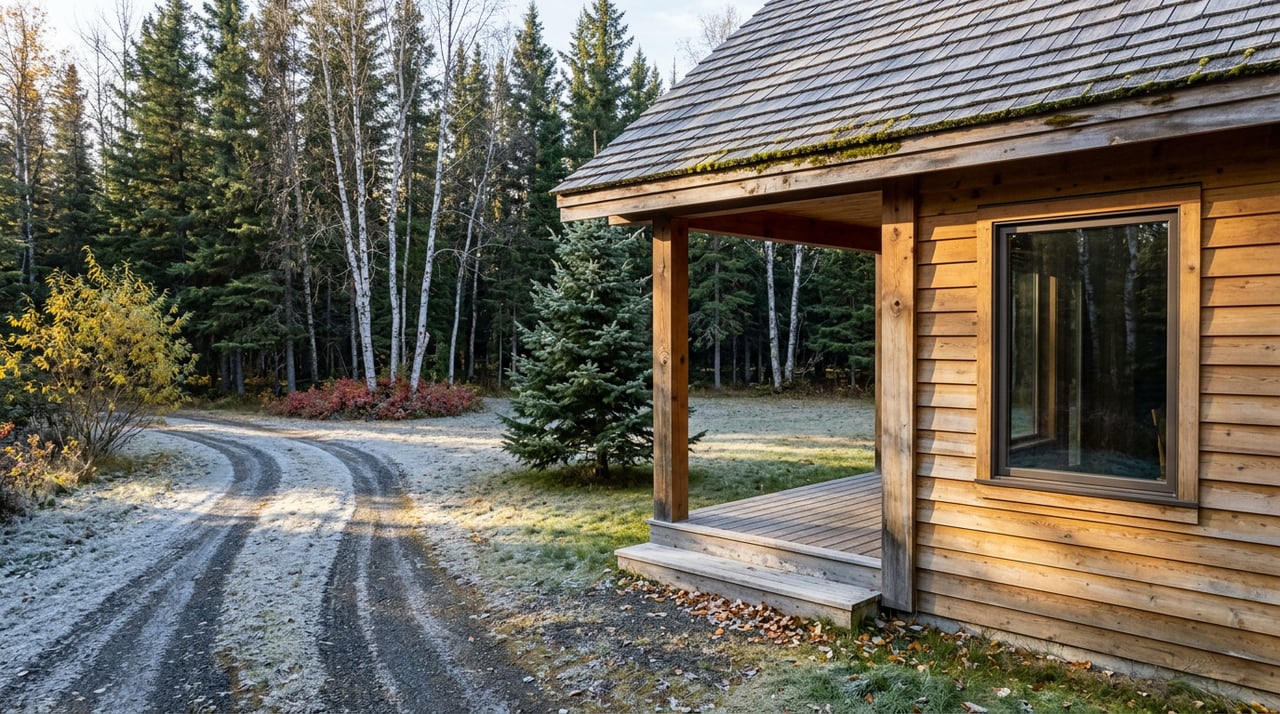
Buying Land in Interior Alaska: Why Prices Differ
September 3, 2026
September 3, 2026
Open the Alaska Department of Natural Resources land sales page this week and you will find something that looks like a deal: roughly 152 parcels statewide in this year's Auction #498, appraised and surveyed, some going for a few thousand dollars. Scroll further and there is a second auction, #499, offering agricultural lots in the Nenana-Totchaket area at similarly modest appraised prices. According to the State of Alaska public notice, bidding on both closes September 30, 2026, with winners announced at DNR's Anchorage office on October 21.
For a buyer eyeing Interior Alaska from Seattle or Denver, eligibility is part of the picture: Auction #498 is generally limited to qualifying Alaska residents, while agricultural Auction #499 is open to non-residents.
Buried in the auction notice is a residency rule that reroutes the entire transaction. Auction #498, the one with 152 parcels, restricts bidding to Alaska residents who have lived in the state for at least one year, with a carve-out only for commercial parcels. Auction #499, the agricultural sale, works differently. It's open to Alaska residents, non-residents, and businesses alike.
That split means two auctions running on the identical calendar, administered by the same agency, in the same appraised-value framework, have opposite eligibility rules depending on whether the parcel is zoned residential or recreational versus agricultural or commercial. A buyer who has never set foot in Alaska can bid on ag land in Nenana-Totchaket. That same buyer cannot bid on a lakeside recreational lot two auctions over, no matter how much cash they're carrying.
In April 2026, Fairbanks North Star Borough approved its first "rural recreation" land use zone, a new category for moving public acreage into private hands through sealed-bid and online auctions starting at 90% of appraised fair market value. Alaska's News Source reported that Borough Mayor Grier Hopkins described the goal as putting public property into private hands. The sale is open to Alaska residents; non-residents are not eligible.
Those eligibility rules shape who can bid; the next question is how the different programs set their prices.
Once you separate who can bid from who can't, the pricing gap between "state land" and "everything else" stops looking like a bargain and starts looking like a segmentation problem.
Program | Who can participate | Pricing basis |
|---|---|---|
DNR Auction #498 (152 parcels, residential/recreational) | Alaska residents, 1+ year (commercial parcels excepted) | Independent appraisal, minimum bid |
DNR Agricultural Auction #499 (19 lots, Nenana-Totchaket/North Fork) | Alaska residents, non-residents, businesses | Independent appraisal, minimum bid |
FNSB Rural Recreation Zone | Any Alaska resident, no non-residents | 90% of appraised fair market value |
Open private market (MLS listings, private sellers) | Anyone | Whatever the market will bear |
The private market is one option for an out-of-state buyer, with no residency restriction or auction ceiling. Agricultural Auction #499 is also open to non-residents, and DNR's over-the-counter program allows residents and non-residents to purchase unsold parcels.
Even for the Alaska resident who does qualify to bid at appraised value, the brochure math tells only part of the story. A past state offering in Delta Junction's Windy City subdivision, within city limits at the junction of the Richardson and Alaska Highways about 95 miles southeast of Fairbanks, is a useful case study in what "affordable" actually costs to finish. The parcels there have overhead electric service but no municipal water supply or sewer system. Access runs along a gravel road, and one lot's frontage road turns overgrown near the subdivision entrance. The site brochure also disclosed an adjacent gravel extraction operation, warning buyers to expect truck traffic, noise from crushing activity, and dust. The DNR site brochure says portions of the subdivision carry wetlands, which means an Army Corps of Engineers permit before any of it can be developed.
None of that shows up in a headline price. It shows up in a well and septic bid, a driveway grading bid, and a permit timeline, and it's the kind of detail that only turns up when someone reads the actual site report instead of the auction summary. Interior Alaska parcels generally come with a further wrinkle worth naming here without turning it into scare language: permafrost under a building site changes foundation design and affects where a well or septic system can go, and it needs to be assessed before anyone commits to a lot, not after.
This is the part that reframes the whole comparison. Private land listings around Delta Junction and the greater Fairbanks area post asking prices well above what the state auctions ask, and it's tempting to read that gap as pure markup. It mostly isn't. Eligibility varies among state and borough programs. Auction #498 and the rural recreation sale are limited to Alaska residents, while agricultural Auction #499, commercial parcels, and DNR's over-the-counter channel are also open to non-residents. Private-market listings have no residency restriction.
DNR offers unsold auction parcels through its over-the-counter (OTC) channel afterward, at prices above appraised value. Residents and non-residents can purchase through this channel.
A state-auction price and a private asking price are not like-for-like comparisons: each reflects a different pool of buyers and a different pricing basis.
If you already live in Alaska and meet the one-year residency mark, the DNR auction calendar deserves a real look before September 30, and the agricultural Auction #499 is worth checking regardless of residency status, since it's open to everyone.
If you're an out-of-state second-home buyer, an absentee investor, or a recently arrived Alaskan who hasn't hit the one-year threshold, check eligibility for each sale: agricultural Auction #499, commercial parcels, and the DNR over-the-counter channel are open to non-residents, while the borough rural recreation sale is limited to Alaska residents. The private market is another option. For any parcel you're considering, check site-specific details such as access, water and sewer, permafrost, and wetlands.
That's not a smaller opportunity. It's a different one, and it rewards the buyer who does the diligence a government brochure would otherwise hand you for free.
Does the residency rule apply to commercial land? No. DNR's Auction #498 residency restriction specifically excepts commercial parcels, which stay open to residents and non-residents alike, same as the agricultural auction.
What happens to state parcels that don't sell at auction? They move to DNR's over-the-counter program, where both residents and non-residents can purchase, but at a price set above the original appraised value rather than at it.
If I just moved to Alaska, when can I bid? The DNR land sales fact sheet says the one-year residency clock applies to the non-agricultural, non-commercial auctions and to the RRCS staking program. Until you clear a full year of residency, agricultural parcels and commercial parcels are the DNR auction options open to you; unsold parcels may also be available through DNR's over-the-counter program to residents and non-residents.
Are the Fairbanks borough's new rural recreation lots road-accessible? Access to that new zone runs through a trail system rather than a standard road, according to the borough's own description of the program, so buyers should confirm access type before assuming standard vehicle access applies.
Comparing Interior Alaska land options means comparing two markets that happen to share a map. If you want a read on what a specific parcel, appraised or private, actually costs to finish once access, utilities, and site conditions are factored in, Beloved Alaska Realty can walk you through it with the immersive property media and local footwork that make a remote decision feel like a local one. Request a virtual tour or local consultation before your next bid or offer.
This article is general information, not legal, tax or financial advice. Consult a qualified professional about your situation.

I know that hard work, knowledge and dedication are required to earn my client's business, respect, and most importantly their trust. I would be honored to work with you in any real estate dealings